
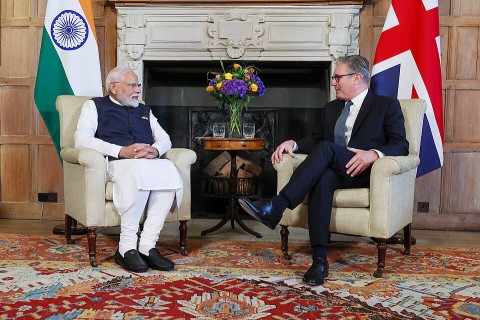
Keir Starmer, the outgoing British Prime Minister, marked a significant achievement on the global stage by finalizing the India-UK Free Trade Agreement (FTA) just before announcing his resignation. This agreement was clinched during discussions with Indian Prime Minister Narendra Modi at the G7 Summit in 2026. Both leaders set July 15 as the date for implementing the India-UK Comprehensive Economic and Trade Agreement (CETA), a move poised to greatly enhance the trade relationship between the two nations, which currently stands at an impressive £48 billion annually.
Starmer was a staunch advocate for fostering closer ties with India, prioritizing the trade deal as a central goal of his administration. He emphasized the economic growth opportunities that the agreement presents, citing India’s burgeoning global economic stature and the benefits of streamlined and cost-effective trade between the countries. Since taking the helm of the Labour Party after its 2019 electoral setback, Starmer has worked diligently to strengthen connections with the British Indian community and to forge a more robust partnership with India, focusing on areas such as trade, security, education, technology, and climate initiatives.
Before embarking on his political career, Starmer had an illustrious tenure in law, serving as the Director of Public Prosecutions. His rise to Prime Minister came after Labour’s sweeping victory in the 2024 elections. Although his early tenure was marked by achievements in economic stabilization and domestic reform, a sequence of policy hurdles and political challenges eventually undermined his leadership position within the party.
In his heartfelt resignation address, Starmer acknowledged that his parliamentary colleagues felt he was no longer the right figure to lead Labour into the forthcoming general election. With respect and appreciation for their decision, he accepted the outcome, concluding a notable era in British politics. His departure underscores the complex landscape of political leadership, where diplomatic triumphs and internal party dynamics can dramatically influence political careers.