
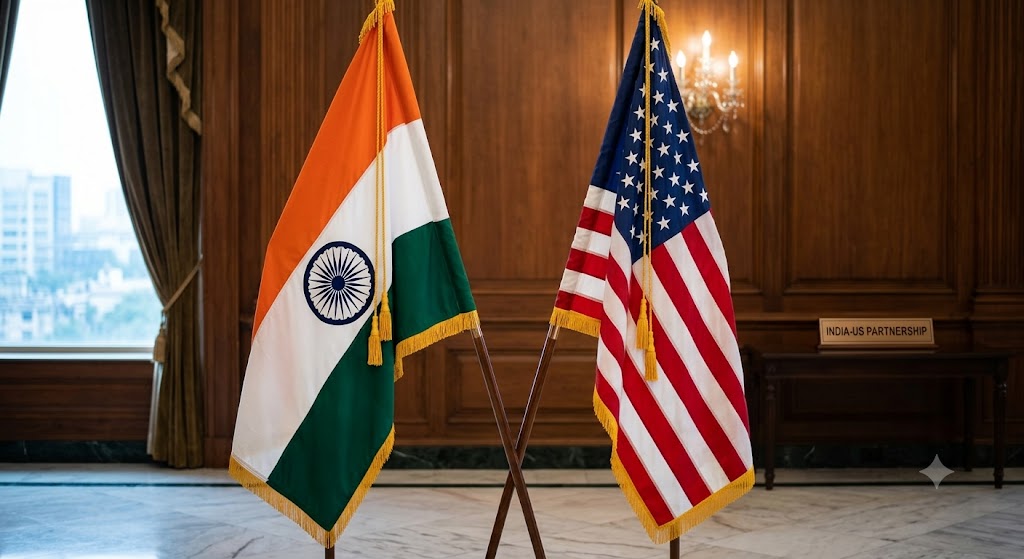
India and the United States have reignited conversations to cement a provisional trade agreement, aiming to reconcile crucial disagreements ahead of an impending tariff deadline. The renewed discussions target the elimination of last-minute hurdles that stand in the way of a comprehensive trade deal between the two nations. Optimism prevails on both sides, with officials acknowledging that only a few contentious issues remain after extensive negotiations.
The trade talks, initially launched with the ambitious objective of increasing bilateral trade to over $500 billion by 2030, encountered setbacks when the US imposed new tariffs on Indian goods, significantly elevating duties on certain products. Although a previous framework sought to decrease tariffs on Indian exports, its implementation faced hindrances due to legal challenges within the US.
The envisioned agreement involves India agreeing to lower tariffs on select American industrial and agricultural goods, while the US reciprocates by reducing duties on Indian imports. Despite this, sensitive areas such as dairy, wheat, rice, and poultry continue to be shielded due to domestic concerns within both countries.
Agriculture remains a significant sticking point, as the US pushes for increased access for its farm exports, while India remains vigilant about the implications on local farmers and food safety regulations. The negotiation’s success could not only enhance trade relations but also bolster India’s competitive stance against other exporters and further the mutual aim of strengthening economic ties between the two nations.